 +1 (774)478-6704
 Order@premiumonebackdrops.com


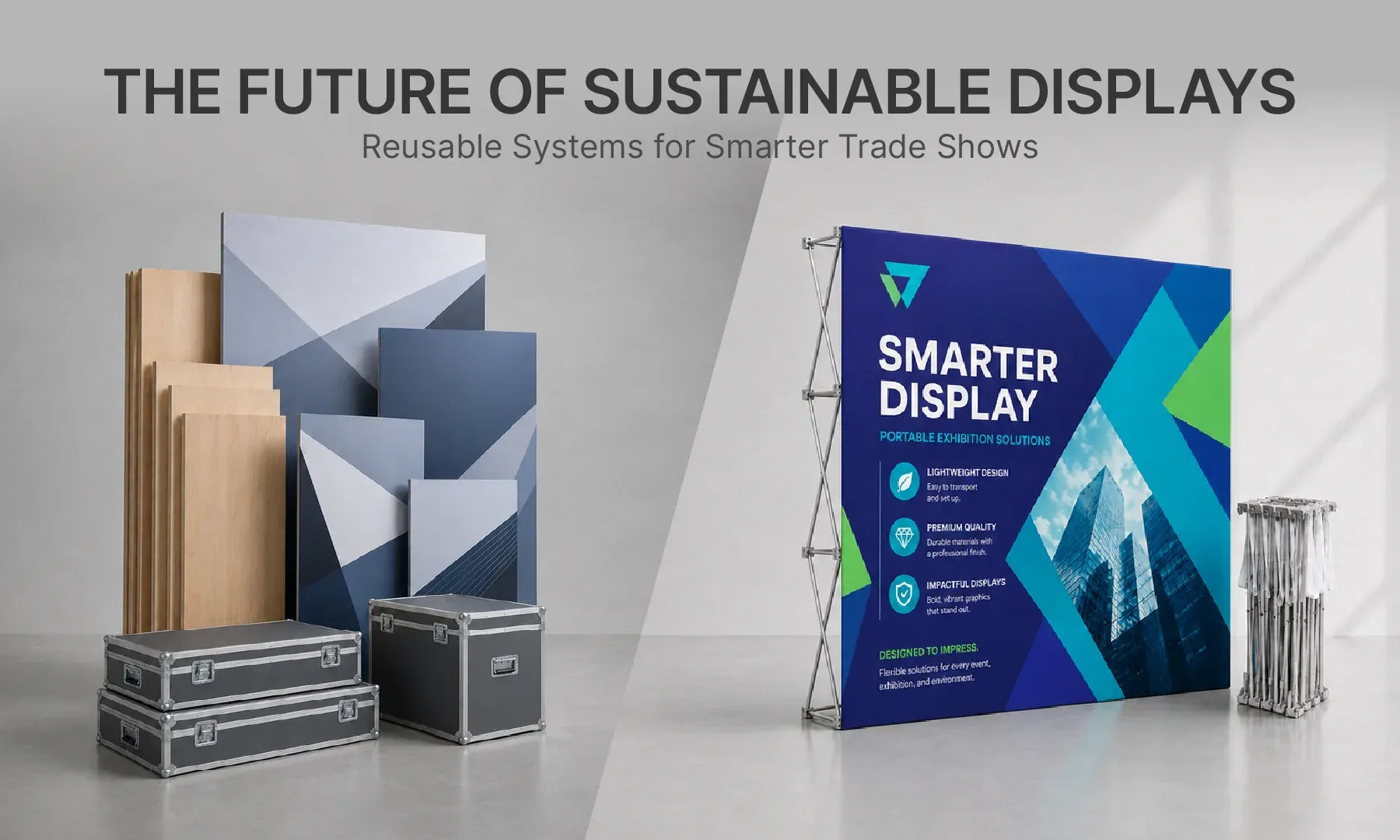
Trade show marketing is changing. Companies are no longer choosing a display only by how it looks or how quickly it can be set up. More teams are also asking how many events the display can support, whether the graphic can be updated, and what happens when the campaign changes.
That is where reusable trade show displays become useful. The goal is not to claim that one display has no environmental impact. A better approach is to reduce unnecessary replacement, use the hardware for longer, update only what needs to change, and take better care of the display between events.
For many exhibitors, a portable Pop Up Display can support this approach. The frame can be reused across multiple events, while compatible fabric graphics can be updated when the branding changes.
Think Beyond the First Event
A display may only be used for a few days at each trade show, but the buying decision should consider what happens after the event.
Before choosing a display, ask:
- Can the main frame be used at future events?
- Can the printed graphic be replaced separately?
- Will the size and shape work for more than one campaign?
- Is the display practical to transport and store?
- Can individual parts be checked or replaced if needed?
These questions are more useful than simply calling a product “green” or “eco-friendly.” A reusable display still needs manufacturing, printing, transportation, and storage. The main advantage is that a well-maintained structure may continue to serve the company instead of being replaced after one short campaign.
One-Time Booth Builds vs. Reusable Display Hardware
Custom-built booths can create impressive event spaces and may be the right choice for some large exhibitions. The challenge comes when a structure is created for one campaign and cannot be easily stored, updated, repaired, or reused afterward.
One-time builds may combine wood panels, printed boards, adhesives, flooring, lighting, signs, and packaging. When several materials are permanently joined together, separating them after the event may be difficult.
Reusable portable hardware follows a different model. The frame is kept for future events while the visible graphic can be replaced when the company changes its message, product, or campaign.
UFI, the Global Association of the Exhibition Industry, discusses waste prevention, reuse, and better event waste planning in its Waste Management in the Exhibitions Industry report.
This does not mean every custom-built booth is wasteful or every portable display is automatically sustainable. The better question is how the display will be used over its full life.

Why Reusable Pop Up Displays Can Make Sense
A reusable display spreads the use of the main hardware across more than one event. Instead of ordering a complete new structure for every campaign, the company can continue using the frame as long as it remains suitable and in good condition.
A Pop Up Display can be packed, transported, assembled, stored, and used again for trade shows, conferences, recruiting events, product presentations, and internal company events.
The actual service life depends on the display model and how it is handled. Careful setup, suitable packing, dry storage, and regular checks can all help reduce unnecessary damage.
The printed fabric may change sooner than the frame. If the company updates a logo, product image, or campaign message, a compatible replacement graphic may refresh the display without requiring a completely new frame.
A Simple Reusable Display Cycle
A more practical sustainability plan starts before the first event and continues after the display is packed away.
1. Choose a Flexible Display Format
Select a size and structure that can support several events instead of designing the entire system around one short-term campaign.
2. Prepare the Artwork Carefully
Check the logo, image quality, text, dimensions, and final proof before printing. Avoidable artwork mistakes can lead to unnecessary reprints.
3. Use and Store the Display Properly
Follow the correct setup process and pack the frame and graphic carefully after the event. Store them in a clean, dry indoor area.
4. Update the Graphic When Needed
When the message changes, check whether a compatible replacement graphic can be used with the existing frame.
5. Inspect Before the Next Event
Check the frame, connectors, graphic, and carrying bag before reuse so small problems can be handled before the next setup.

Design the Graphic for More Than One Event
Artwork also affects how long a display remains useful. A backdrop printed with one event date, one temporary promotion, and one short-term message may become outdated immediately after the show.
For graphics intended for repeated use, keep the main backdrop focused on longer-lasting information such as:
- Company logo
- Core brand colors
- Main product or service category
- General company website
- Product or lifestyle images that are not tied to one event
Short-term information such as event dates, limited offers, changing sponsor lists, or campaign-specific QR codes can often be placed on smaller signs, handouts, digital screens, or other easy-to-update materials.
This does not mean every backdrop must be generic. The goal is simply to separate long-term branding from information that changes frequently.
Good Care Helps Extend Useful Life
Reusable hardware only provides long-term value when it is handled properly. Repeated setup and transportation can cause unnecessary wear if the frame is forced, parts are packed incorrectly, or the fabric is stored while damp.
After each event:
- Check the frame for visible damage
- Make sure connectors open and close correctly
- Check the fabric for stains, tears, or stretched areas
- Confirm that all parts are returned to the carrying case
- Make sure the graphic is clean and dry before storage
Do not place fabric directly against sharp hardware during storage. Keeping the graphic protected can help maintain both the print surface and the overall presentation.

Replacement Graphics Can Extend the Use of the Frame
Branding often changes faster than display hardware. New products are launched, logos are updated, and campaigns are refreshed throughout the year.
When compatible replacement graphics are available, the existing frame can remain in use while the visible message changes.
Before ordering replacement fabric, confirm:
- The original display model
- The exact frame dimensions
- The frame shape
- The graphic attachment method
Do not assume that fabric from another display model or size will fit. Accurate product details help avoid ordering a graphic that cannot be used with the existing hardware.
For replacement graphics or questions about an existing frame, contact the POB team with the product model and dimensions.
Use Specific Facts Instead of Broad Environmental Claims
Words such as “sustainable,” “green,” and “eco-friendly” can mean different things. Stronger product communication explains what the display actually allows the user to do.
For example:
- The frame is designed for repeated event use
- Compatible replacement graphics may be available
- The frame uses a collapsible structure for packing and storage
- Individual components can be inspected between events
Avoid claims such as “zero waste,” “100% recyclable,” “carbon neutral,” or “no environmental impact” unless the exact statement is supported by reliable evidence.
ISO 20121:2024 provides a broader framework for organizations working to improve the environmental, social, and economic effects of events. Review ISO 20121 Event Sustainability Management Systems for additional context.
The Events Industry Council also encourages event teams to reduce unnecessary single-use materials and consider reusable options where practical. Read Five Ways to Make Your Events More Sustainable.
Frequently Asked Questions
Are Pop Up Displays automatically sustainable?
No. A Pop Up Display can support repeated use, compact storage, and replacement graphics, but its overall impact also depends on manufacturing, transportation, frequency of use, care, and end-of-use handling.
How many times can a reusable trade show display be used?
There is no single guaranteed number. Useful life depends on the display model, setup frequency, transportation, storage conditions, and how carefully the frame and fabric are handled.
Can I replace the fabric without buying a new frame?
Often, yes, when a compatible replacement graphic is available. Confirm the exact model, dimensions, frame shape, and attachment method before ordering.
What should I avoid printing on a reusable backdrop?
Avoid too much short-term information if you want to reuse the graphic. Event dates, temporary promotions, and changing sponsor lists can make an otherwise usable backdrop become outdated quickly.
How should I store a Pop Up Display between events?
Keep the frame and graphic in a clean, dry indoor area. Make sure the fabric is dry before packing, protect it from sharp objects, and check all components before the next event.
Build a Display Program Around Reuse
A more sustainable trade show display strategy does not depend on one product or one material. It comes from making practical decisions about how long the display can be used, what can be updated, how it is maintained, and what needs to be replaced.
Reusable Pop Up Displays can support this approach by separating longer-lasting hardware from printed graphics that can change with the campaign.
Choose a format that works across several events, care for it properly, and replace only the parts that need to change when possible.
Explore our Pop Up Display collection or contact our team for help choosing a display based on your booth size, event schedule, and long-term usage plan.